Ex Confrutta – San Donà di Piave
Redevelopment of the Ex Confrutta Building in San Donà di Piave
Location
San Donà di Piave (VE), Italy
Period
2023 - currently
Client
Comune di San Donà di Piave
Partners
ETB studio, ing. S. Boscherini, SAICO Ingegneria S.r.l.
Amount
€ 4.800.000
The renovation design for the Ex Confrutta production complex, located in San Donà di Piave, is part of a broader urban regeneration plan for the “Portanuova” section. The intervention will transform a disused structure into a new multi-purpose facility, designed to host conventions, sport, and cultural events. This is in strong alignment with the infrastructure projects currently underway—the new train station, the ATVO bus station, car parks, and the pedestrian and cycle paths—positioning the building as an urban landmark that is accessible, open, and easily traversed.
This is not just a building renovation, but an extensive reconversion: the former fruit and vegetable warehouse, which is obsolete and noncompliant with current structural and seismic requirements, will be converted into a contemporary civic space. This space will be capable of accommodating foot traffic, events, and citizens within a rapidly evolving urban context.
- Final project
- Executive project
- Safety coordination during the Design and Execution phases
- Works management
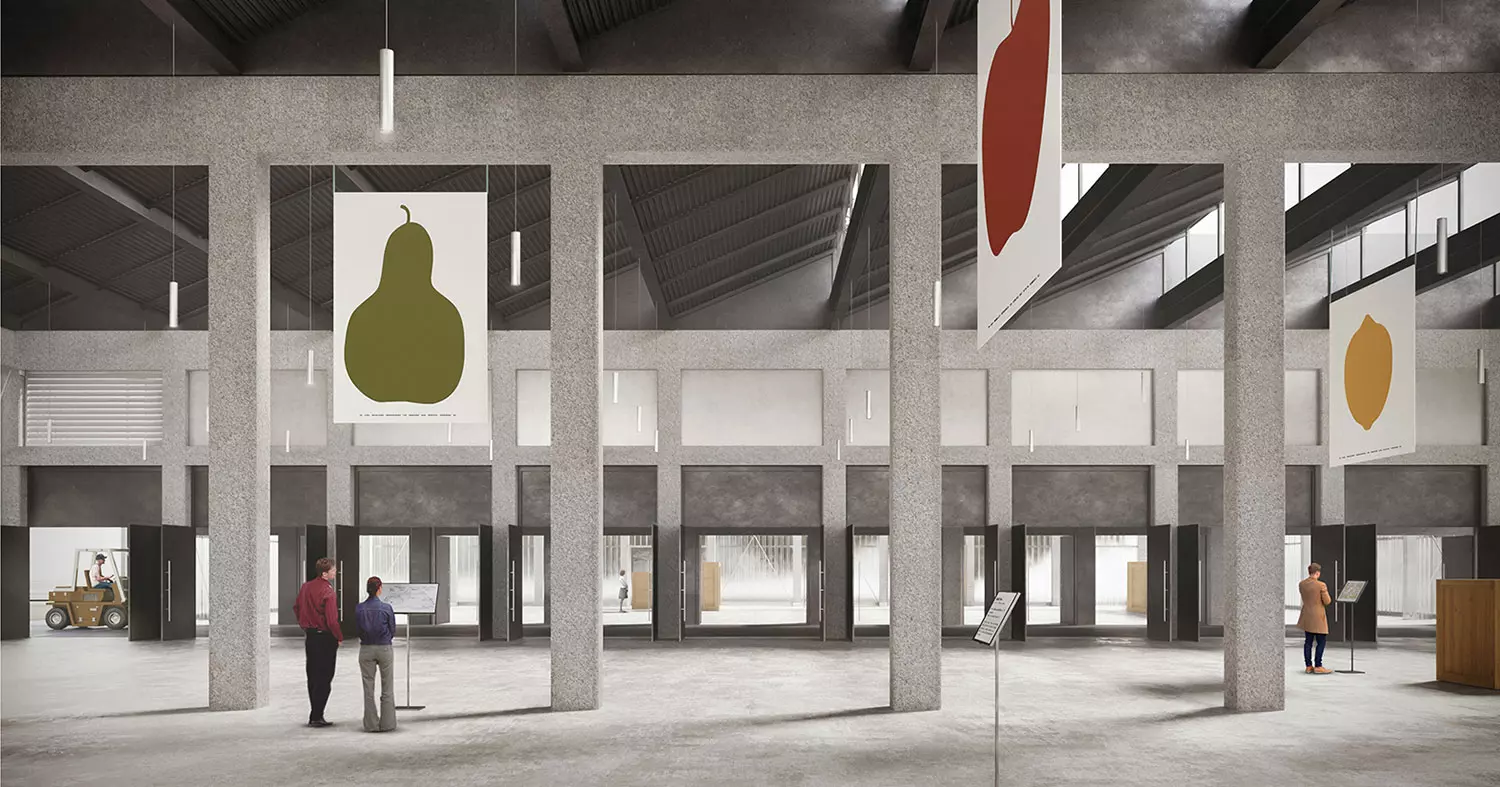
The project involves a complete transformation of the “Confrutta” building, through the demolition of parts of the structure that are not compatible with its future purpose and the structural recovery of the core structure, made up of two domed pavilions. The original structure made in reinforced concrete, structurally and seismically consolidated, will be left exposed, conferring material continuity and a urban identity to the new building.
The architectural layout has be redistributed with at its center an East-West pedestrian gallery, which crosses the entire lot and connects the new train station to Via Pralungo, flanked by two North-South entries to guarantee maximum accessibility. The design integrates itself with the new urban and road layout, including exclusively pedestrian and cycle paths and the creation of a surrounding green area.
The architectural shell consists of a new, semi-transparent metal skin, which wraps and protects the existing structure, offering natural ventilation, shielding and a new contemporary image to the building. The design is completed by a new covering, the requalification of adaptable interior spaces and the inclusion of technical equipment such as ventilation grids and a fire safety system.
This all results in a permeable and recognizable civic architecture, capable of accommodating multiple uses and of actively interacting with the transforming urban landscape.